
"We keep us safe. We set us free": How one small town in Upstate New York proves community was always the point
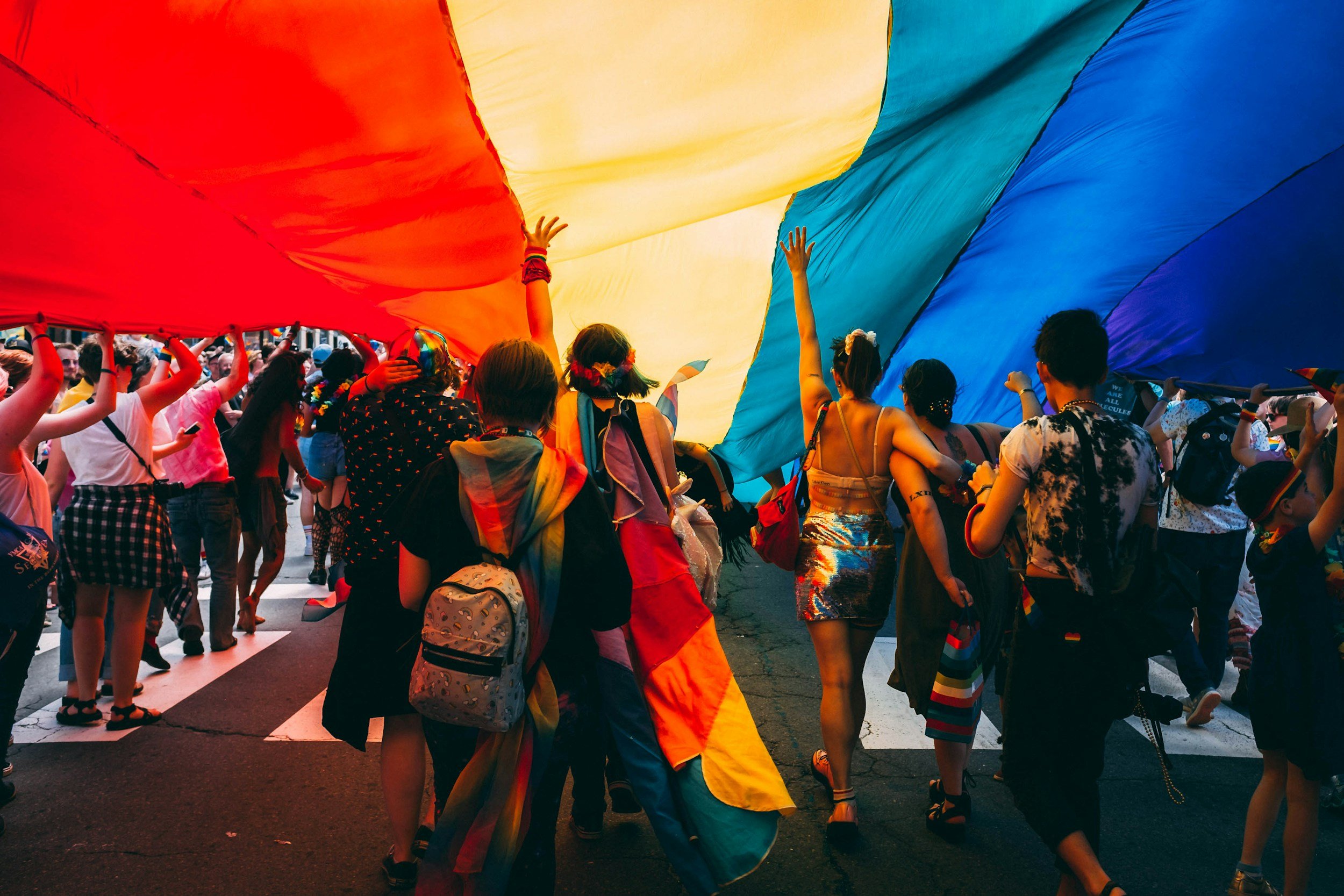
Every June, the images flood the feed: confetti cannons and flaots, headline performers and crowds stretching farther than the eye can follow. Pride in the major cities is a spectacle, certainly, and there is joy in that. But there is another kind of Pride happening in the places the cameras don't always follow: in fairgrounds and community parks; in small cities and towns where the person standing next to you isn't a stranger. They're your neighbor or your kid's teacher. And showing up here, visibly and unapologetically, means something different.
FLX Pride was never supposed to be a big idea. It started in 2012 as a response to something simpler and more urgent: people were lonely. LGBTQ+ folks in the Finger Lakes region of Upstate New York were driving hours to find community and find themselves reflected back. Amy Hickey-Smith, a licensed clinical social worker, heard the ask and helped answer it. Two years later, FLX Pride held its first celebration.
This year, the festival enters a new chapter as it is fully community-led for the first time. Community members stepped up to convene a volunteer committee that is making every decision. And the timing is certainly not incidental. As attacks on trans and queer people escalate at every level of government, FLX Pride made the deliberate choice to return the festival to the community it was always meant to belong to.
And the community said yes.
I sat down with Amy and co-chair Columba Salamony to talk about what it means to build something, to let it go, and to keep showing up anyway.
POLISH: Amy, you started this. Take me back to the very beginning: what made you decide the Finger Lakes needed its own Pride, and what did it look like in those first days?
Amy Hickey-Smith: Pride wasn't actually the beginning.
It began in 2012, when I started creating LGBTQ+ programming in the Finger Lakes because there weren't many visible opportunities for people to gather, connect, and build community locally. As a social worker, I was hearing from people who felt isolated; many were driving to Rochester or Syracuse just to find events and resources that reflected their experiences.
As those programs grew, community members started asking for something more. They wanted a Pride celebration here, in the Finger Lakes. Something visible, welcoming, and local. A place where they could celebrate who they were without having to leave their own communities.
So in 2014, FLX Pride was born. Not from my idea alone, but from what the community said it needed. My role was helping create the space and bringing people together to make it happen. In those early days, it was truly grassroots: volunteers, determination, and a lot of heart. What we had was a shared belief that LGBTQ+ people deserved to be visible, celebrated, and supported right here.
Columba, how did you come into this? What pulled you from being part of the community to helping lead it?
Columba Salamony: I joined the FLX Pride Committee in 2023 after joining the board of Family Counseling Service and being invited by staff to get involved. I enjoyed the work, and I really felt like the event was something the Geneva community should be proud of. I was new to the area, and it was a great way to connect with people whose lives reflected my own.
Last year I rejoined for that same reason. This year, as we pivoted to a community-led model, it felt like a natural fit for me to step into the convenor role. I was glad that Zariah Gosha stepped up to lead alongside me. It is a lot of work.
How does your role sit alongside the work you do outside of the organization?
Amy: For me, they're deeply connected. I'm a licensed clinical social worker, therapist, and social work professor. My professional life is centered on helping people find connection, belonging, and community, and those same values have always shaped FLX Pride.
What's different this year is that my role has evolved. After helping build LGBTQ+ programming beginning in 2012 and helping launch FLX Pride in 2014, I've intentionally stepped back from day-to-day planning. I'm now serving primarily as a consultant and support person. And, honestly, that feels like a success story.
The goal was never for FLX Pride to belong to one person. The goal was to help create something the community would eventually embrace as its own. Watching new leaders step forward has been incredibly rewarding.
Columba: I've been a lifelong community organizer and activist, working in LGBTQ+ spaces since high school. I've participated in Pride committees in other places I've lived, and while most of those events were much larger, the wholesome feeling of FLX Pride resonated with me, and it truly has a wide-reaching impact. All of my organizing experiences connect through a lifelong process of pursuing peace and justice and working to respect the dignity of all people.
This is the first year billed as fully community-led. What does that shift mean in practice, and why now?
Amy: This year feels like coming full circle. FLX Pride began because community members asked for it. Over the years, Family Counseling Service of the Finger Lakes served as fiscal sponsor and provided important organizational support that allowed the event to thrive. We're deeply grateful for the role they played. Now we're entering a new chapter. The festival has transitioned back to community leadership, with a diverse committee of volunteers leading the vision, programming, fundraising, and operations. Decisions are being made by people who live here, work here, raise families here, and care deeply about the future of LGBTQ+ people in the Finger Lakes. One of the greatest gifts of starting something is seeing it become bigger than you ever imagined. The dream isn't that it depends on you forever. The dream is that it grows beyond you.
Columba: As many of us are painfully aware, attacks on LGBTQ+ people — whether from a neighbor or from government leaders — continue to rise across the country. This has also impacted organizations that provide necessary services to our community. Family Counseling Service's programming and therapeutic services are critical to people across our region, and to protect those services, the board made a conscious decision to step back from organizing the festival. In turn, we agreed that it's important for Pride to be led by LGBTQ+ people and their loved ones, so that it has a fighting chance of continuing into years to come, despite these ongoing attacks.
The theme this year is "Community in Color." Who named it, and what do you want people to feel when they walk in under that banner?
Amy: The theme emerged from conversations within the planning committee about what Pride means right now. When I hear "Community in Color," I think about joy. I think about visibility. I think about celebrating the full spectrum of who we are. At a time when many people are being told to make themselves smaller, "Community in Color" feels like an invitation to do the opposite. When people walk through those gates, I want them to feel welcomed. I want them to feel safe. I want them to feel seen. Most of all, I want them to feel like they belong.
Columba: In our early committee meetings, the theme came up several times and we found it hard to pin down. But given that this is community-led, we knew "community" needed to be central. The committee also agreed that highlighting "color" was important — and not just the colors of a Pride flag. It's about racial diversity, and the truth that we wouldn't have Pride without trans women of color. Our community is enriched in myriad ways by our color-fullness, and it's essential to lift that up, especially when the world feels heavy. It's what brings us together, helps us form life-sustaining bonds, and keeps us safe.
FLX Pride’s theme this year celebrates the diversity of the community.
Can you talk about this year's programming?
Amy: One thing that's always been important to us is creating a celebration that truly serves all ages. We'll have live entertainment, food, community organizations, vendors, family activities, youth-focused programming, and opportunities for people to connect with local resources and one another. What I'm especially proud of is that this festival has remained family-centered from the beginning. People can bring their children, grandparents, friends, neighbors, and chosen family and spend the day together. The goal has never been simply to host an event. The goal has been to build community, and every activity, every partnership, every resource table contributes to that.
Attention is often given to Pride festivals in bigger cities, mainly Los Angeles, Chicago, New York. What does Pride do in Geneva, Canandaigua, and Penn Yan that it simply can't do in West Hollywood, Boystown, or Manhattan?
Amy: Big-city Pride celebrations are incredible, but rural and small-town Pride serve a different purpose. In smaller communities, visibility is personal. You're not standing next to strangers. You're standing next to your neighbors, your child's teacher, your healthcare provider, your coworker. Small-town Pride creates opportunities for people to see that LGBTQ+ people aren't somewhere else — we're here. We've always been here. We're raising families, serving on school boards, running businesses, and contributing to our communities every day. That local visibility has the power to transform communities in ways that are uniquely meaningful.
Columba: Small and rural Prides have a lot to offer. Major city Pride festivals have largely been co-opted by capitalism and pinkwashing; their marches are full of corporations and work in close collaboration with local police. Small and rural Prides can remain true to the character of the people who gather. They're grittier, more honest, a little funkier, and much more expansive. There's a meme that's circulated for years showing the relative size of each letter in "LGBTQ+" with the G enormous, the T barely visible, and the Q nonexistent. That's what a lot of big-city Pride feels like. Small Prides allow that queerness to shine. We come together on our own terms, in our own way, without needing to filter ourselves through whatever a corporation wants us to look like. And we don't need police to monitor us.
We've been saying for generations: we keep us safe.
For a queer or trans kid in a small town, what does it mean to see this happen where they live, and not somewhere they have to leave home to find?
Amy: It means everything. For too long, many LGBTQ+ young people have received the message that acceptance exists somewhere else. That if they want to be themselves, they'll eventually have to leave. Local Pride challenges that narrative directly. When a young person sees hundreds of people gathering in support of LGBTQ+ community members in their own hometown, they receive a different message. They learn that they belong here. They see adults living openly and authentically. They see families supporting one another. Sometimes all it takes is seeing one person who reminds you of yourself to realize you're not alone. That's why visibility matters.
Columba: It's critical for queer and trans kids to see themselves in their adult queer neighbors — to see that a flourishing life is possible in rural communities, that it's not all bullying, harassment, and trauma. So many LGBTQ+ kids become a statistic over exactly this kind of invisibility. Since moving to rural America four years ago, I've seen the tremendous ways that my visibility as a prominent queer figure in small towns has monumental impact for young people. They see someone and think: it's possible to thrive in this place. That's not a small thing. That's everything.
We're gathering in a political climate that's openly hostile to trans people. What does it mean to put on a free, all-ages, fully visible Pride right now?
Amy: It means showing up for one another. Pride has always been both a celebration and an act of courage. Right now, we're seeing LGBTQ+ rights, and particularly the rights of transgender and nonbinary people, challenged in ways that have real consequences for people's lives. By creating a free, all-ages Pride celebration, we're sending a clear message: everyone deserves access to belonging, connection, joy, and safety. Transgender people deserve to be seen, valued, and celebrated. LGBTQ+ people deserve to exist openly in every community, including rural ones. And we will continue showing up for one another. That's what has sustained this movement for generations, and it's what will carry us forward.
Columba: I think we low-ball our region when we say it's not accepting. There are certainly situations where it isn't safe. But over the last decade, LGBTQ+ acceptance in the Finger Lakes has been growing steadily. A generation ago, young trans kids could only thrive if they moved to Rochester, Syracuse, Buffalo, or larger cities. Now there are more supportive teachers, business owners, and community leaders willing to go to bat for their trans children, friends, and neighbors. The tide is shifting. What's truly abhorrent is that the most vocal antagonists of trans people hold the most prominent seats of power. But that power comes from us, and only exists if we're complicit in our own destruction. Events like this one, small, funky, and unapologetically queer, demonstrate to us that a future is possible. Not just one where we're welcomed and loved, but one where we can guarantee that same liberation for every oppressed person.
When someone leaves the fairgrounds on June 20, what do you want them carrying home?
Amy: I want them to leave feeling hopeful. I want them to leave knowing they're not alone. And I want them to leave understanding that community is something we build together. FLX Pride started as an idea, but it became a movement because people showed up. Year after year, people continue to show up for one another. That's the real magic. If people leave feeling more connected, more hopeful, and more committed to building a place where everyone belongs, then we've done exactly what we set out to do. Because Pride isn't just about one day, it's about creating a place where people know they belong every day of the year.
Columba: I want people to know and remember that the world belongs to us. Despite everything, our truest fight for liberation already exists in our hands and our minds. We keep us safe. We set us free. There are people across this region — friends, comrades, allies — who can help us realize a future where our neighbors aren't being disappeared, where everybody can afford to live, where we can all just breathe. Fascism's greatest goal is to force us into silos where we don't connect with, talk to, or love one another. Coming together in spaces like this is what gives us life. It's what shows us we can do this another day. And it's what tells the people trying to break us that we are not going down without a fight.
