
David Archuleta: "It's Beautiful to Be a Sexual Human Being"
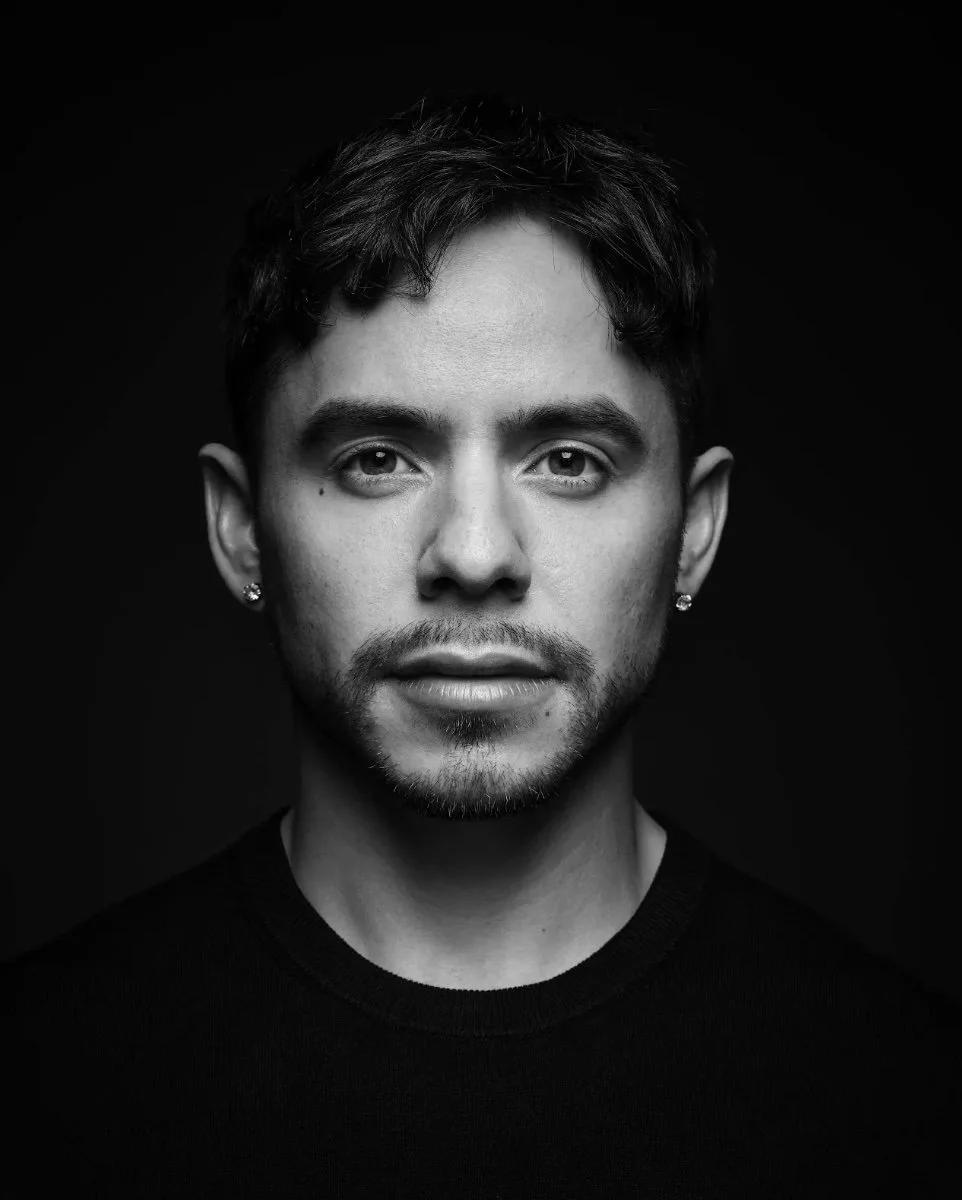
David Archuleta for the cover of his book, Devout. (Robert Ascroft for David Archuleta)
There are mornings, lately, when my jaw refuses to cooperate fully.
The soreness of facial feminization surgery is still settling into its new architecture. So I met David Archuleta the way the body sometimes insists on: off-camera, a little tender, present anyway. He wished me a speedy recovery before I could ask a question. Then we got into the thing he has spent years learning to say plainly — that the body was never the enemy he thought it was.
The American Idol alum grew up Mormon, and the only sexual health education he can remember came down to a single rule: no sex until marriage, and only ever with a wife. The silence on everything else wasn't an oversight; in the communities he's now trying to reach, it's the norm. That silence has a body count. Hispanic and Latino people make up roughly 18% of the U.S. population, but accounted for about a third of new HIV infections in 2022, and Latino men who have sex with men now carry the highest number of new diagnoses of any group in the country. The crisis is youngest and sharpest at the margins: community data from AIDSVu shows people under 35 driving the majority of new diagnoses among Latine MSM, and a 42% jump in new diagnoses among transgender Latine people between 2018 and 2022.
The gap is where his partnership with Gilead's Healthysexual campaign aims to close. And most of it comes down to information he didn't have until his thirties. PrEP is about 99% effective at preventing HIV. And a person already living with HIV who takes their treatment and maintains an undetectable viral load cannot transmit the virus to a sexual partner at all (Undetectable = Untransmittable.) Neither fact, Archuleta says, ever reached the bubble he grew up in. The death sentence the sermons promised is no longer true.
We talked about the unlearning that brought him here — and the conversations he hopes to make possible at kitchen tables that have never held them.
POLISH with Marie-Adélina: You've talked openly about how coming out cracked something open in you, not just publicly, but in your relationship to your own body and your faith. When did sexual health become part of that reckoning? And what did you have to unlearn to get there?
David Archuleta: Let's start with the unlearning, because I had to unlearn that sex was bad. The only sexual-health education I got was: no sex until you're married, and only with the person you marry. That was it. So to then ask, okay, what if I'm not going to marry a woman? — I had to figure out what happens from there.
This was the first time I was letting myself like a guy, which was also a big no-no. I had to learn how to let myself just have chemistry with another man. So I called my friend and asked him — what is it like to kiss a dude, to be intimate with another guy? Does it hurt? Is it okay? I said, I'm sorry if this is weird to ask, I just don't know who else to ask, and I feel like I can trust you. And he said, Hey, don't feel embarrassed, you can ask me anything. It made it less scary. It wasn't this bad, spooky, Halloween-movie kind of thing to hear. It was just — okay, now I know. And that's good to know.
Then I had to learn that it's okay to be a sexual person at all, and that there's a way to do it responsibly. I didn't know there was a responsible way, because I thought the only responsible thing was to wait until marriage and figure it out from there. Then I learned there's actually information out there — you can read about STIs, you can get tested, you can check in with a doctor, and there's medication to help prevent HIV. And I was like, wait, there's medication for this? I thought that was just over. I was taught that if you got HIV, that was it — that it was the evidence that what you were doing was wrong. So I figured, okay, my existence is bad. And I've had to learn that's not true.
"I figured, okay, my existence is bad. And I've had to learn that's not true. If anything, it's beautiful to be who I am — and it's beautiful to be a sexual human being. That's part of our existence."
If anything, it's beautiful to be who I am, and it's beautiful to be a sexual human being. That's part of our existence. I didn't even know PrEP existed until I came out, in my thirties. So I realized there have got to be other people like me — people who grew up in a bubble like I did — who don't know these things exist.
PrEP has been available for over a decade, and yet Black and brown communities still face some of the steepest barriers to access and awareness. In preparing for this campaign, what surprised you — or made you angry?
I lived in Tennessee for eight or nine years — that's where I came out — so I saw how scared people still were to be open about who they are, even once they'd come to terms with it. It was hard for them to get access to health care and education, because they just didn't want to talk about it. It's like putting on blinders: I don't want to know what's out there. And in the process, you put your own health at risk.
I see it especially in the South, and especially in Latino and Black communities, where the culture can be more religiously led. Talking about sexual health becomes taboo, so people are too afraid to see a doctor. They're afraid to even know what medication exists, because a lot of the time they want to tell themselves, I'm not like those people, so I don't need that information. And it's like — you can live with so much more comfort and confidence if you're willing to find the courage. It is scary to even read about this stuff when you've been told your whole life to stay away from it. But if you go talk to a doctor and ask about your options, this burden lifts off you. There's a website I'm partnering with Gilead on, healthysexuals.com, where people can learn about STIs, testing, and PrEP before they ever take the step of seeing a doctor. Because educating yourself is power. I want people to know they have resources.
With that information more accessible, what conversations are you hoping this campaign makes possible at the kitchen table — ones that maybe weren't possible at yours growing up?
It depends on the family, honestly — whether sex is a kitchen-table conversation at all. But one thing is just this: I didn't know there was medication that prevents the spread of HIV. I didn't know a person could be HIV-positive, take their medication, be sexually active and responsible, and not transmit it to anyone else. I had no idea. That's something I only learned in the last few years.
In the religious community I grew up in — I'm Mormon — the only narrative I heard was that HIV and AIDS kill people, and that's that. You can't be sexually active, because you might contract it. So I talked to some of my family and said, did you know there's PrEP now, and that it's about 99 percent effective at preventing it? People are living full, healthy lives because of it. A lot of the time, in religious communities, HIV gets treated like the godly punishment — that's the reason given for why we can't accept people being gay or queer. And it's like: we've had scientific advancements that mean people don't have to be afraid anymore. There was a time when we were afraid, and it was horrible — how many people we lost because we didn't have this medication yet. But now we do. So if there are stigmas, be willing to talk. If the moment feels right, educate your family too, so they don't judge so much — so they realize PrEP is a thing, and it helps people, especially in gay and queer communities, stay safe and live full, healthy, happy lives.
