
"Less proving. More knowing.": Monroe Alise on craft, community, and coming into her own
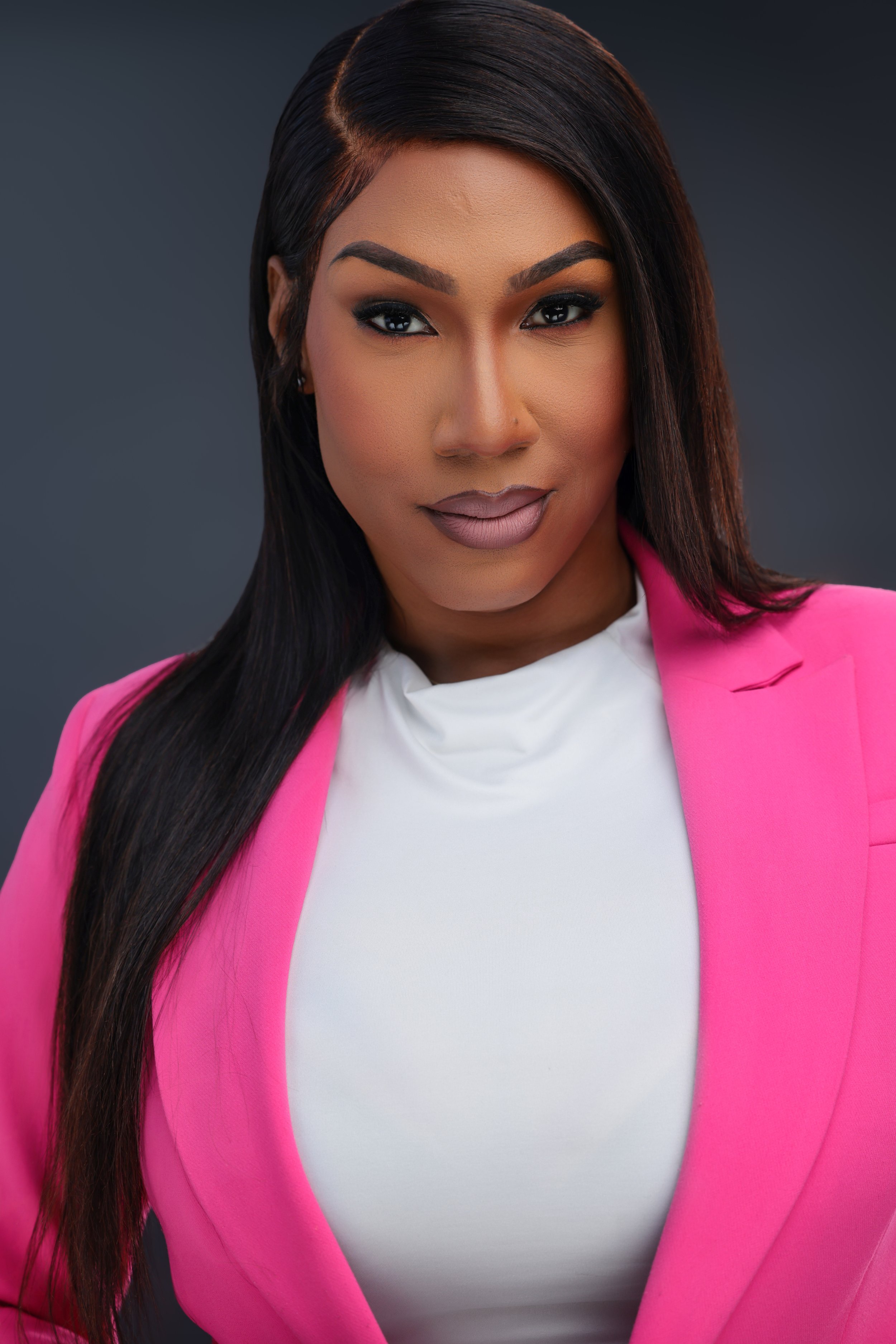
Actor and media personality, Monroe Alise (actorheadshot for monroe alise)
Before there were credits, there were reps.
Monroe Alise was filming episode reviews from her bedroom. She was sitting in acting class. She was studying performances frame by frame, networking, taking meetings, walking into auditions, walking out of rejections, and then waking up the next morning to do it again. She fell in love with P-Valley after the first episode and started reviewing it online – even getting the attention of the cast and creator – told the universe she'd be in season two and kept watering her craft until the universe answered. Later that year, she booked a role in season two, playing a fictionalized version of herself.
Soon after, Lena Waithe and the team at Showtime's The Chi built a role specifically for her: Isis, house mother to Fatima (played by the phenomenal L'lerrét Jazelle), introduced in season six. Now, Monroe reprised Isis for the show's eighth and final season, and the woman returning to the role is not the one who first cast her.
We talked to Monroe about craft, character, the Atlanta community that raised her, and what it means to stop proving and start knowing.
POLISH: You came up through music, then built an audience through social media episode reviews before you ever had a credit. You've said you "told the universe" you'd be on the show and kept watering your craft until it happened. What did that discipline actually look like day to day, and what were you doing when nobody was paying attention yet?
Monroe Alise: Honestly, I was working before there was proof it would pay off. I was consistently creating content, enrolled in acting class, studying performances, filming episodic reviews, networking, taking meetings, auditioning, getting rejected, and then waking up and doing it again. I treated myself like a working actor and media personality long before the credits matched it.
A lot of people only see the moment things become visible, but they don't see the years of private discipline. There were nights I was recording content with barely any views, practicing monologues in my room, teaching myself to command a camera, to tell stories, to hold people's attention. I kept watering the craft because I believed opportunity would eventually meet preparation. Thank God it's working.
Isis was created in season six specifically for you. Walking back into her for the final season, what did you know about her this time that you didn't know the first time you put her on?
The first time I played Isis, I understood her confidence. This season, I understood her protection.
I realized she's somebody who knows exactly how to survive without losing herself. She understands her power, but she also understands boundaries. The first time around, I saw her glamour and presence. Coming back, I saw her emotional intelligence more clearly and how intentional she is with who gets access to her softness, her vulnerability, and even her attention. This season, I played her with more stillness. Less proving. More knowing.
You've described Isis as someone who understands power: how to hold it, how to move with it, and when to protect it. That sounds like a woman you know. How much of your own survival intelligence lives in her?
A lot of it lives in her. Probably all of it in some ways.
Black trans women learn very early how to read energy, protect ourselves, adapt, and still find ways to remain soft without becoming naive. That's survival intelligence. Knowing when to speak. Knowing when silence is safer. Knowing when somebody deserves access to you and when they don't.
Isis carries that same awareness. She's observant. She's intentional. She understands that power is not always loud. Sometimes it's restraint. Sometimes it's leaving. Sometimes it's choosing not to explain yourself.
There's a version of "representation" that's really just optics: a trans character who exists to educate, to die, or to be someone else's lesson. Isis isn't that. How did you protect her from becoming that? Who had your back in that room?
First of all, major shoutout to the iconic Lena Waithe and the creative team. We talked, and they understood that there was room for nuance. I felt heard in conversations about tone, emotional truth, and how Isis moved through the world.
I protected her by insisting on her humanity first. I never wanted Isis to exist as a punchline or joke instead of a person. Trans women deserve complexity. We deserve to be funny, layered, messy, ambitious, guarded, desirable, vulnerable — simply human. Nobody wanted her to feel one-dimensional. And I think that's why audiences connected to her: she's not written as a joke. She's written as a woman with her own perspective, her own energy, her own power.
You got your shot partly because you loudly and publicly loved P-Valley before anyone cast you. What would you say to a Black trans woman right now who's creating in the dark, talking to an audience of fifty people, and wondering if any of it is leading somewhere?
I would tell her not to focus on how many people are watching, but who is watching. Some of the most important seasons of your life will happen before people start clapping for you. Those fifty people matter. The consistency matters. The discipline matters. You are building your voice, your confidence, your audience, and your resilience all at the same time.
I was reviewing shows online before I ever cast on one. I was speaking dreams out loud before there was evidence they were possible. Sometimes your current reality hasn't caught up to what your spirit already knows. Keep creating anyway.
When the TS Madison Starter House opened, you said the goal was to ensure Black trans women have the tools to move "beyond survival and into stability." That's a real distinction. What does stability actually require that survival doesn't?
Survival is about making it through the day. Stability allows you to imagine a future.
When somebody is surviving, every decision is immediate: safety, housing, food, transportation, and healthcare. Stability creates room for rest, long-term planning, creativity, healing, and joy. It gives people the ability to dream beyond crisis.
And for Black trans women specifically, stability requires infrastructure. Housing, healthcare, financial literacy, mentorship, community support, and real opportunity. Not just emergency responses when something goes wrong. Everybody deserves the chance to build a life, not constantly try to recover one.
Atlanta's Black trans community has been building its own infrastructure — housing, health, chosen family — often without institutional support and increasingly without government funding. What do you want people outside of Atlanta to understand about what that building actually looks like?
I want people to understand that a lot of this work is deeply personal and deeply communal. It looks like people opening their homes, sharing resources, helping each other get jobs, rides, healthcare, food, safety, connections. It's community members becoming case managers, advocates, protectors, mentors, and family for one another because they had to.
Atlanta's Black trans community is brilliant. There's innovation, leadership, and resilience. But there's also exhaustion. A lot of people are carrying entire support systems on their backs while still trying to survive themselves.
The reality is, many Black trans women have been doing the work institutions failed to do for us.
When everything in the current political moment is designed to make Black trans women feel expendable, where does your faith and joy come from? And is there something you're growing toward that doesn't yet have a name?
My faith comes from surviving seasons I genuinely thought would break me. There were moments in my life where I didn't know how things would work out, and somehow I still made it through. That teaches you something about yourself and about God.
And my joy comes from refusing to let the world fully harden me. Joy is resistance, too. Beauty is resistance. Faith, friendship, laughter, storytelling, dreaming — all of that matters.
As for what I'm growing toward, I think I'm becoming somebody less interested in proving my worth and more interested in fully living. I don't yet have the language for that version of myself, but I can feel her arriving.
I'm simply becoming.
