
Hope Giselle is not ‘Your Average Girl’–and she’s done accepting average narratives
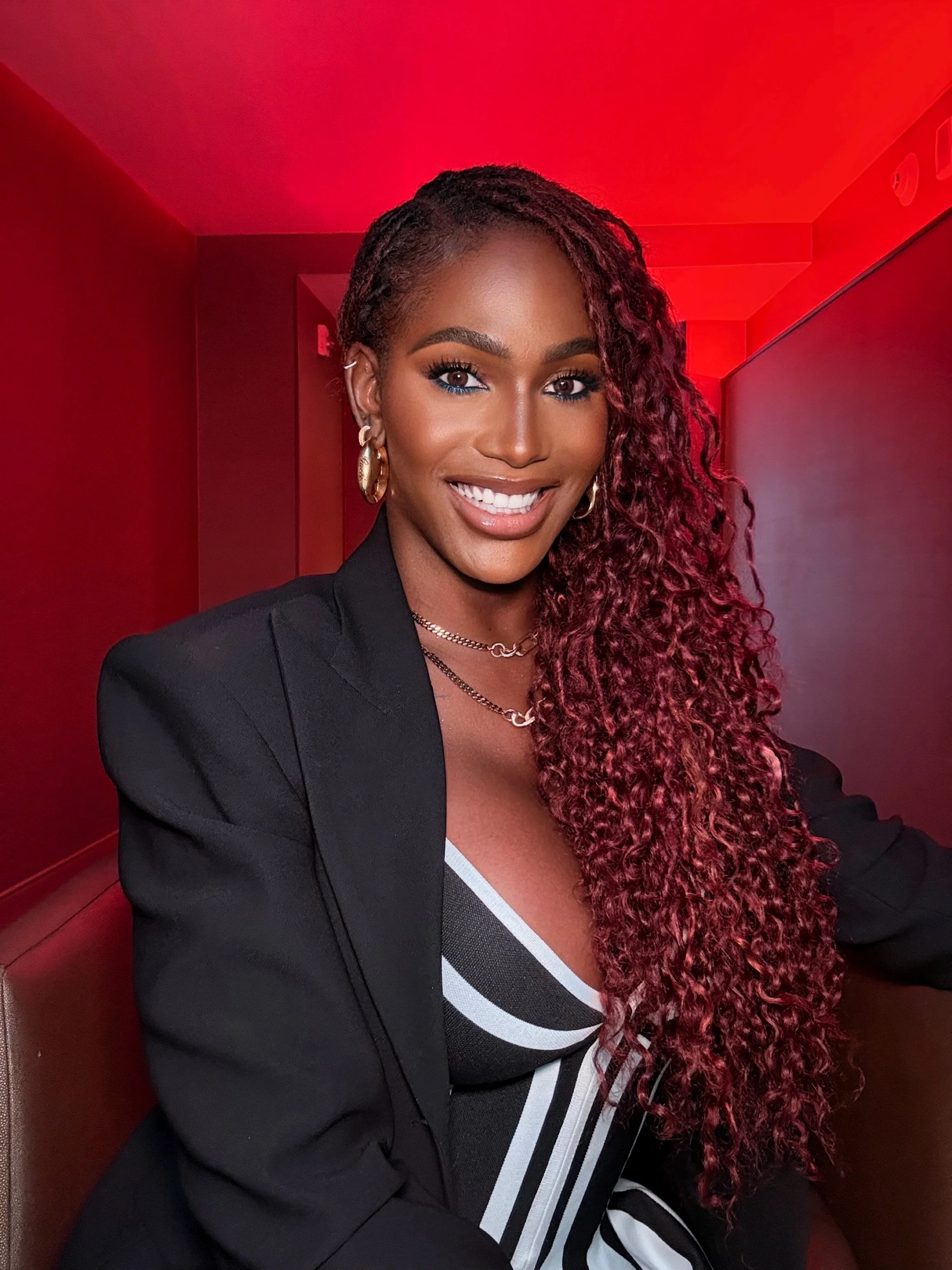
The activist and filmmaker Hope Giselle-Godsey on dismantling the “pipeline” story of Black trans womanhood, and why inspiration without infrastructure is not enough. (Courtesy of Hope Giselle-Godsey
For over 15 years, Hope Giselle-Godsey has been organizing, disrupting, and insisting on more for Black trans women in public life. From viral protest moments to boardrooms, she has leveraged visibility as both shield and strategy.
But with her new documentary, Not Your Average Girl, she shifts from reacting to narratives to authoring one.
The film is not a highlight reel. It is not a trauma reel either. It is, as she makes clear, a dismantling: of the linear scripts often handed to trans women in media storytelling, of the idea that survival is the only story worth telling, and of the belief that inspiration alone is enough.
In this conversation with POLISH, Hope Giselle speaks candidly about reframing trans storytelling, redistributing resources through her national tour, protecting her peace as she prepares for motherhood, and why building “not average” infrastructure matters just as much as building a brand.
Marie-Adélina de la Ferrière: Not Your Average Girl is described as more than a documentary, but as a cultural moment. What did you feel was missing from the way trans lives are typically framed in the media that made this project necessary now?
Hope Giselle: You know what’s interesting is that I saw stories about trans women that were just very linear. They were always the same story with a different font, a different race of girl. But you knew that at some point, you were going to hear about her sex work. You knew at some point you were going to hear about some domestic violence situation or a pimp. You were going to hear about her prison stint or something to that effect.
And there always felt like there was this desire by executives and corporations and media partners to paint the trans experience out as what I like to call, lovingly, the “dick sucking to glam girl pipeline.” And they didn’t have any problem producing those stories.
There is trauma. We all have trauma. It’s not just trans people. But the only trans trauma that they are willing to show is the one that involves our bodies and self-deprecation. They don’t want to tell the stories about the trauma that was about fearing not passing my classes. They don’t want to tell the trauma that was simply about the fact that I am dating and I have a good experience dating, but it’s difficult to try to decide whether or not I want to accept crumbs or pennies…or if I want to actually have conversations about what it looks like to be in a committed relationship.
And those stories can be just as salacious and just as attention-grabbing. But I think that there’s a desire by the media, and even by some social entities and cultural commentators, to make sure that people’s belief of trans people, and specifically Black trans women, is that our only come-up is through our bodies and our only trauma is at the hands of the people who want our bodies.
And I just wanted to dismantle that.
The film isn’t positioned as being for trans people only, but for anyone who’s ever been underestimated or told to shrink themselves. How do you balance specificity while still speaking universally?
Obviously, I’m a Black trans woman, right? And I think that naming the film Not Your Average Girl really sends a message to the community of people that can resonate with who I am. But I think that the film itself is something that touches any and everybody who’s ever been counted out, anybody who’s ever worked through it.
Anybody who’s ever had a dream or who’s been passionate about something, who’s been misunderstood.
There are so many folks that I think will ask the question of, “Well why is Hope this person? Where she come from?” And so this is the long-form response to that.
There are some people who are out here working their butts off, and when they finally get there, the crowd goes like, “They came out of nowhere,” but they didn’t see the work that it took. And I think that anybody who is working, anybody who is passionate, understands that.
And I know that this film crosses over into that
regardless of your gender identity or sexual orientation.
The tour includes a $1,000 Hopeful Legacy Grant and a year-long membership to Soho House for select recipients. Why was it important that this project redistribute resources, not just publicity?
Because this tour and this film is not just a “look at Hope and how amazing she is” tour. And I knew that, especially when you name something Not Your Average Girl, a lot of people have the expectation that they’re going to see a bunch of highlights of my life and watch me walk down the red carpet. That’s just not what this film is about.
It’s an inspiration, and I wanted to be a possibility model for people. But outside of that, it’s one thing to be a possibility model; I have to give people the resources to actually pursue their dreams and goals. I had had plenty of possibility models with no function or no financial.
It took me years to build my first website. It took me years to go to my first red carpet in a way that made me feel confident. It took me years to get my first ring light. I had been doing videos for years before I had good lighting.
So our goal was not only to say, “Look at what Hope did,” and send people home. It was about, “Look at what Hope did; we want to inspire you to do your own version of that.” And to a good lucky six of you, not only do we want to inspire you, but we want to send you home with the resources financially to be able to start up something.
And then we want to invite you back to a summit where you’ll be able to get insight from people in the industry who are going to help you kickstart that. I want to build more than average people.
It’s a community cultural shift. It’s not just a pat on the back to myself.
Tell me more about the summit.
In June, we’ll be bringing the scholarship awardees out to either D.C. or L.A. for a weekend intensive where they’ll meet up with four or five different industry experts. People who understand storytelling and influencing, marketing, tech, leadership, and development.
All of these folks are going to be offering masterclass-style workshops in a very intimate setting. You don’t have to fight 50 people to ask a question at the end. You don’t have to hope that you get attention from the speaker. You’ll be able to have a hands-on, one-on-one experience with people who are actually killing the game right now.
You’ll have people like Dr. David J. Johns. You’ll have folks like Sean Coleman talking about what it’s like to build organizational housing, like he did. And so a lot of what’s going to happen at the summit is not just information; it’s networking. It’s figuring out how your dreams might align with their current projects.
I don’t want to just give you $1,000, kick you to the curb, and then never see you again. I really want to build relationships and help you build your professional relationships with people that are going to not only help with your dream, but help you see it through.
You’ve spent over 15 years organizing nationally and challenging anti-trans legislation. How has your relationship to visibility evolved?
As a wife and as somebody who is seeking to be a mom in the next few years, I will say that my relationship to visibility has become a little bit more... I’ve been more cognizant of how visibility can also be harmful.
My husband is in the military, and there’s a lot of time when he’s away, and he worries about my safety and what happens as people get to know me. And I think about what I’m establishing before motherhood, because I have to either maintain that or explain that once I enter motherhood.
A past life Hope might have said my relationship to visibility doesn’t change. I understand that sometimes you have to be the first or one of the brave ones in order to make change. And I still stand on that principle. I just also stand on it with caution and the understanding that for as visible as you are, there are going to be people who visibly love you and people who visibly despise you.
And how you navigate that is going to determine your quality of life and the amount of peace that you have. And right now I’m about maintaining that peace. So visibility, yes — and also with caution and picking my battles and only speaking about the things that I’m super passionate about, not just things that are popular in media right now.
Corporate-backed tours can sometimes feel extractive. With partners like Gilead Sciences and Soho House involved, how did you ensure this collaboration aligned with community accountability rather than branding optics?
I am very big about walking away from things that don’t serve me. Walking away from things that don’t serve the mission. So for me, it was important to have extensive conversations with both Gilead and Soho House about who this tour was really for, and making sure that the voices, existence, and experiences of these people were going to be seen in all of their glory, and not in respectability, not in a desire to make them more palatable.
Specifically with Soho House, it’s a spot where you kind of have to be the who’s who to get in. And the membership can be pricey. But I wanted to make sure that if we are offering these year-long memberships, we were introducing people to a space where they would be welcomed.
So we’re not just inviting people into spaces that can feel elitist and exclusionary without some sort of safeguard to protect them as they start to matriculate through these rooms. And they’ve been more than helpful.
With Gilead, while they have a framework targeted around HIV and AIDS, they understand the community and how our community struggles with the impact that HIV and AIDS still has––whether it’s physical impact or the impact of stereotypes and stigma. All of our partners have been amazing about making sure those principles aren’t lost.
When audiences leave the screening, what do you hope shifts inside them?
I want people to leave inspired. I want folks to leave each theater and say, “Because of this film, I’m a little bit more inspired. I’m going to go and do the thing that people told me I couldn’t do. I’m going to go do that thing that I put down six months ago. I’m going to make it happen.”
Because I don’t have to be average. I don’t have to fit in. I don’t have to fit the status quo. I can be loud. I can be quiet. I can be a rule-breaker or a rule-follower. But I get to decide that for myself.
And I hope people are inspired to find out how they want to name their livelihood for themselves, rather than continuing to let the world dictate that for them.
