
Nobody’s business: In defense of EJ Johnson’s right to want what EJ wants
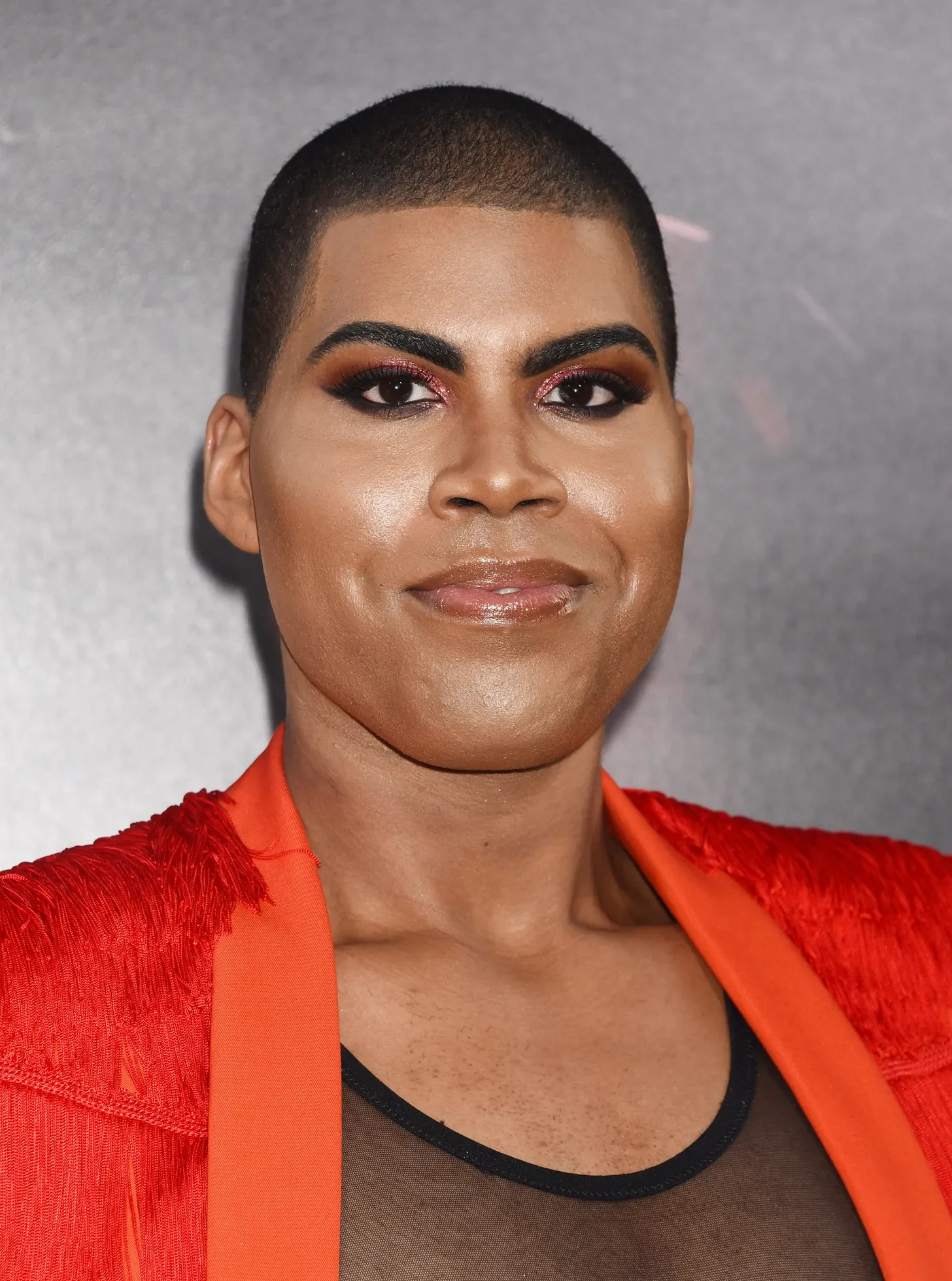
The discourse around EJ’s dating preference is beyond intolerable. It’s time to end it. (Shutterstock Creative/Ga Fullner)
There is a particular kind of exhaustion that comes from watching your community eat its own.
The personality, icon, and yes, child of Magic, EJ Johnson, went on Reality with The Kingand did something radical in the most ordinary way possible.
“When you’re telling people about who you are, you are telling them,” Johnson said. “I’m not looking for acceptance. I’m not looking for your validation. I am telling you what’s going on.”
Between talking about life as a basketball legend’s child and being outed by the media, EJ talked about their attraction to cis straight men. (In the episode, EJ also appeared to mention eschewing he/him pronouns. Naturally, I’m going to be respectful.) EJ was honest, unbothered, and specific about their desire in a way that most people get to be publicly.
And some folks on Beyoncé’s internet lost their damn minds.
The critiques came in fast and layered. Some wrapped themselves in the language of politics–why would you give your energy to straight men? Some dressed asconcerned–doesn’t he know his worth? And then, because this is the internet and we have never learned to be better, some just got ugly, including the unabashed audacity of EJ’s looks. One creator bluntly says EJ isn’t attractive. “Girl, EJ Johnson is ugly,” they said. “And you can’t change my mind.”
EJ Johnson told their truth, and the community (queer, Black, at the intersections or far away from it) responded by making EJ the problem. This is not a new script, however. We have seen this before.
Media superstar TS Madison has spoken publicly about her attraction to straight men, and the response followed the same ugly pattern. The pile-ons. The insinuations. The threats to bodily harm! The thinly veiled suggestions that a Black trans woman’s desire is somehow an embarrassment. And, worse, the men who are attracted to her and others like her are proof of confusion of sexuality or being DL.
What connects EJ’s moment to Madison’s isn’t just the surface similarity of who they’re attracted to. It’s the architecture of the backlash. In both cases, Black queer people dared to name their desire without seeking permission or offering an apology. And in both cases, the community–our community–responded with surveillance, correction, and cruelty.
Now ask yourself: when was the last time a white gay man was dragged for who he finds attractive? When did a white trans woman trend on social media because the community decided her preference was politically inconvenient? The answer, with rare and notable exceptions, is that it doesn’t happen. Not like this, with this volume and venom. White queer and trans people are largely extended the grace of private desire. Their dating lives, even when platformed, are not treated as referendums on their worthiness of community embrace.
They are allowed to want what they want.
That grace is not extended equally. And the people who consistently pay the price for its absence are Black. We have to ask ourselves what we’re actually defending when we do this because it is not liberation.
Desire is not a political platform. It is not a press release. It does not owe anyone coherence with their theory of social change.
The line between community accountability and community policing is not subtle: one holds power responsible; the other holds desire hostage.
Then there are critiques of Black bodies. The vitriol aimed at EJ Johnson did not stay within the dating realm. Some reached for the oldest, most reliable weapons in the anti-Black arsenal and deployed them with the particular viciousness that the internet enables and silence permits. Or, worse, enables.
This is where the throughline becomes undeniable. The same culture that polices Black queer desire is the same culture that has always weaponized anti-Blackness against Black queer and trans people who step out of line. And it is worth noting clearly: this particular punishment isn’t equalized across the board. When white queer and trans public figures live loudly, the discourse tends toward celebration or, at worst, indifference. The think pieces about their bodies rarely come from inside the house, and the cruelty rarely wears the face of solidarity.
For Black queer and trans people, the calculus is almost always different.
Internalized anti-Blackness and transmisogyny can shape who we’re drawn to, what we believe we deserve, and how we move through the world. That conversation is worth having–ideally with care, relationship, and humility. But what happened to EJ, TS, and many others wasn’t that. Black queer people stated their preference on a public platform and were met with the kind of swift, dehumanizing correction that we claim to reserve for our actual oppressors.
I know this territory personally. I revel in my femininity as much as before my transition as now. I, too, preferred straight men then and now and didn’t find or yearn for queer men. The response ranged from dumbfoundedness to indifference to sheer audacity. It still happens on occasion. Meanwhile, there were or are moments when white gay men would bring in their straight lover of the moment, and no one gasped or challenged them. Quite the opposite, they were praised.
Why can’t we have that same freedom?
EJ Johnson does not owe us a dating life that makes sense. TS Madison does not owe us a preference that maps cleanly onto folks’ framework. Neither of them owes anyone an explanation, defense, or apology for knowing what they want. What they deserve–what we all deserve–is the space and community that can hold complexity without reaching for cruelty. If we can only love and defend Black queer and trans people when desires are legible for others to understand, then that is not a commitment to understanding or allyship.
It is a commitment to their own comfort.
The discourse around EJ Johnson was never really about EJ. It was about what some believe Black queer people are allowed to be, and how swiftly folks can move to punish those who exceed those limits. That is the thing worth examining, not someone’s dating life.
Because EJ and other Black queer and trans folks’ dating life is nobody’s business but our own.
Perspective is dedicated to featuring a wide range of inspiring personal stories and impactful opinions from the LGBTQ+ community and its allies. We welcome your thoughts and feedback on any of our stories. Email us at marie-adelina@polish.media. Views expressed in Perspective stories are those of the guest writers, columnists, and editors, and do not directly represent the views of POLISH with Marie-Adélina or our parent company, POLISH Media.
