
From Commentary to Consequence: The ‘DL Whisperer,’ Ts Madison, and Stochastic Terrorism
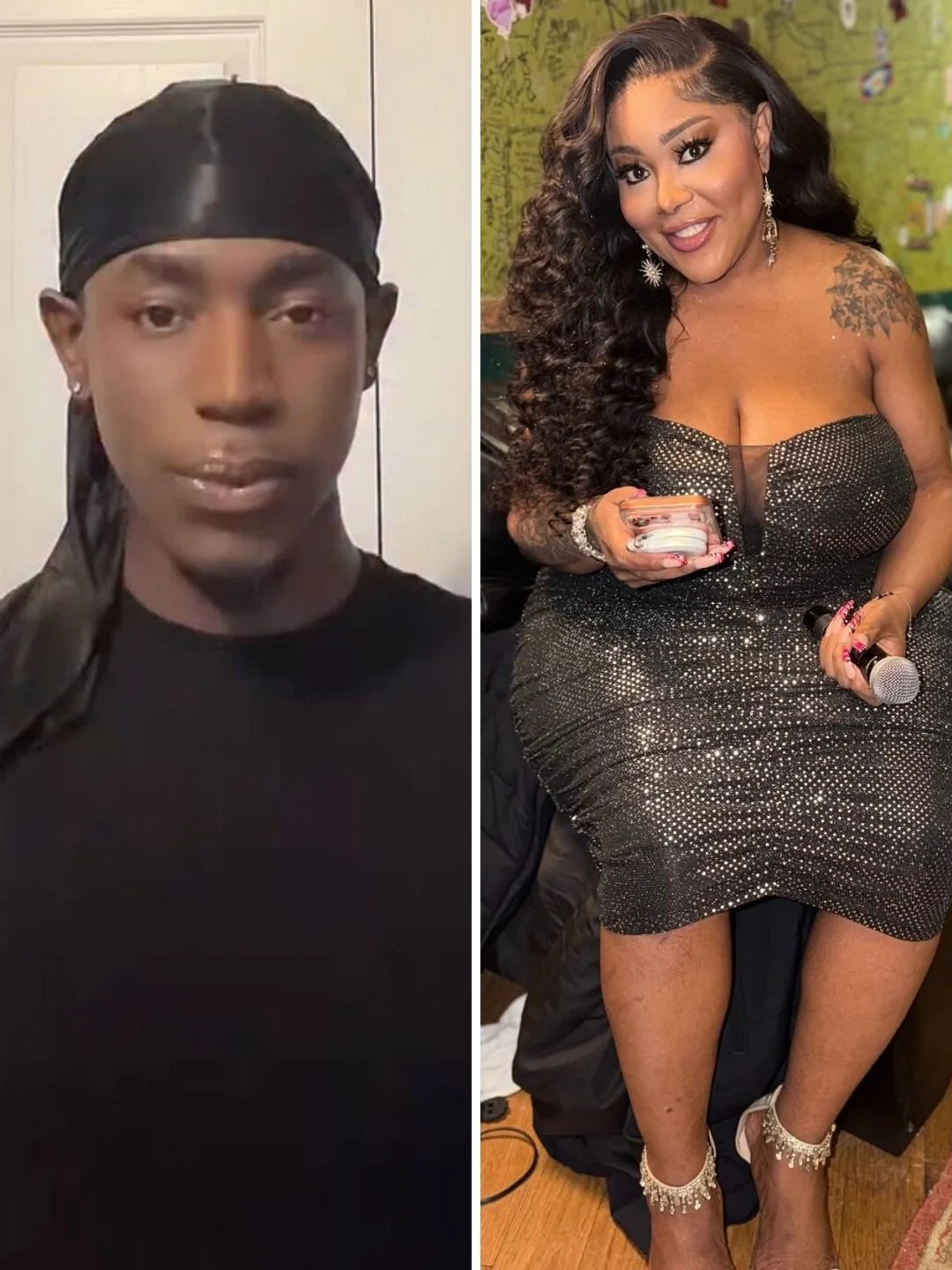
Photo: TikTok; Instagram | tsmadison
We keep telling ourselves it’s just the internet: that what’s said online is only commentary, expression, and could never harm us.
Sure, the internet allows us to find a chosen community when the real one turns its back. It allows us to follow inspiring, fabulous, and fierce trans personalities who embrace their lived experience unapologetically. But for trans folks, especially Black trans women, the internet has never been “just anything.”
It is an archive and a stage. And increasingly, a tool of surveillance and a hunting ground.
What we’re witnessing in the escalating harassment of Ts Madison, Dominique Morgan, Cherry Rogers, and other Black trans women is not random conflict or personality clash. It is a recognizable pattern of stochastic terrorism: coordinated and repeated public demonization, algorithmic amplification, and obsessive community targeting that creates the conditions for real-world harm.
When harassment moves from digital fixation to physical proximity, that escalation is not shocking. It is structural, and Black trans women are far too often the proving ground.
No one has to say “go hurt her” for stochastic terrorism to unfold. Instead, a figure with an audience repeatedly frames a person or a group as dangerous, deceptive, immoral, corrupt, or fraudulent. From there, the rhetoric escalates, and the dehumanization intensifies. The audience becomes primed and someone, somewhere, takes the cue. Meanwhile, the originators maintain plausible deniability. “I never told anyone to do anything.”
But the atmosphere has already been set.
In the case of Naquan Palmer, known as the ‘DL Whisperer,’ and his repeated targeting of Black trans women, what we see is not isolated commentary. It is repetition: fixation, framing, and escalation. Podcast appearances, live streams, and affirming audience feedback from many Black cisgender women may have reinforced the escalation. From there, the shift from digital antagonism toward alleged in-person stalking behavior collapses the boundary between screen and street.
And that collapse is the point.
Meanwhile, platforms and algorithms increasingly reward outrage and controversy. When a creator repeatedly targets a person or group, engagement spikes. Followers feel deputized. “Investigative” language masks obsession and hate.
The creator’s platform grows, while the target absorbs the risk.
Escalations like this are not about disagreement. When the same person is framed repeatedly as deceptive or dangerous (be it by a creator, podcaster, or even a president) the commentary shifts from ideas to personal surveillance. The audiences mobilize through insinuation and hostility and, thus, the statistical likelihood of harm increases––if not the target, someone from the group they represent.
This is what stochastic means: not guaranteed, but predictable in aggregate. And that predictability increases hostility not just toward one person but the group they represent.
Here is what makes Black trans women especially vulnerable in this climate: the harassment does not begin on neutral ground. It lands in a culture already steeped in anti-Blackness, transmisogyny, and moral panic about gender, in a society where Black trans women are hypervisible and hyper-targeted.
It lands where violence against us is both common and underreported.
From 2024 to 2025, GLAAD’s ALERT Desk tracked 932 anti-LGBTQ+ incidents, with nearly 52 percent of these incidents targeting transgender and gender-nonconforming individuals. The Human Rights Campaign recorded 27 fatal attacks on transgender individuals last year. Since 2013, the organization has documented nearly 400 deaths, the majority involving trans people of color.
When I interviewed Ts Madison and Dominique Morgan earlier this month for Out.com, what struck me most was not the spectacle surrounding Palmer’s behavior, but the discipline. Madison is deliberate. Morgan understands narrative. They both understand that visibility is power, and moving in silence behind the scenes is strength.
After reviewing the screengrabs provided for the exclusive, the transphobia was unmistakable. What was just as striking was the defense that followed after publication. Some commenters publicly echoed his same accusations, repeated misgendering, and framed hostility as accountability, including beneath Out’s own post. The escalation was not confined to one voice; it was reinforced in real time.
Black trans women occupying power, presence, and privilege disrupts hierarchy. They disrupt the fantasy that trans women are marginal, disposable, and dependent. They disrupt the idea that gatekeeping Black femininity is necessary to be palatable. When someone like Ts Madison builds media, wealth, influence, and cultural capital on her terms, it unsettles the social order.
That unsettlement destabilizes people.
The internet of 2026 is not like the one Al Gore “invented” in the 90s. Beyoncé’s internet is no longer entirely separate from physical reality. It’s an accelerant that compresses time, amplifies narrative, and collapses distance.
But the line we must hold is this: no amount of public visibility makes someone public property. No amount of “disagreement” justifies obsessive targeting. No amount of likes and comments should allow others to celebrate or amplify the escalation from online harassment to showing up at their home whilst “telling his followers that he was going to beat me until the breath left my body,” as Madison told me.
If we refuse to name stochastic terror when we see it, we make room for its next iteration. We normalize the pattern and teach audiences that sustained dehumanization is entertainment or in the name of community service.
Black trans women should not have to survive public obsession, humiliation, or harassment to exist in public. That is not radical. It is the baseline.
If we believe and desire in a culture that values freedom and self-determination, we must be willing to confront the systems that repeatedly render trans and other marginalized groups as targets rather than titans.
We recognize the pattern. The only question is whether we disrupt it – or wait for another escalation to make it undeniable.
